UN Rapporteurs Condemn the Systematic Destruction of Palestinian Education
When an occupying military demolishes an archive, burns a university library, or reduces every higher institution in a society to dust, it is waging war not merely against an armed adversary, but against the very possibility of that society’s future. That reality received its clearest institutional accounting on October 29, 2026, when the United Nations Committee on the Exercise of the Inalienable Rights of the Palestinian People convened its 431st meeting at UN headquarters in New York. There, independent experts delivered an unsparing inventory of what Palestinian scholar Karma Nabulsi first identified in 2009 as scholasticide: the methodical, calculated destruction of an entire people’s educational and intellectual infrastructure.

Addressing the briefing, Farida Shaheed, the UN special rapporteur on the right to education, reported that 98 percent of schools and all thirteen universities across the Gaza Strip have been ruined. This physical devastation mirrors an appalling human toll: almost 21,000 Palestinian students in Gaza have been killed, a loss Shaheed characterized as “a classroom of children every day during the war on Gaza.” More than one thousand educators, lecturers, and administrative workers have been killed across the Palestinian territories, including over eight hundred school personnel and 240 university professors and staff members in Gaza alone.
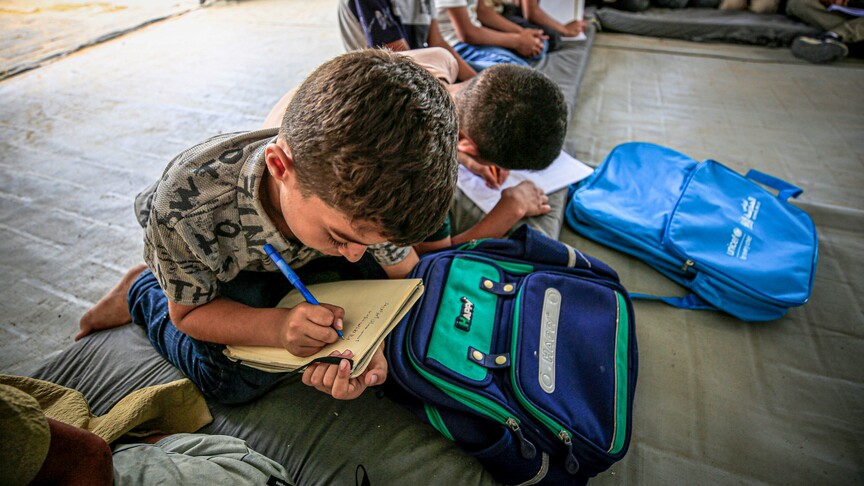
These figures cannot be parsed as the unfortunate byproducts of urban combat. They represent the systematic dismantling of the social, scientific, and cultural life of a nation. As Shaheed told the assembled diplomats, “Education is an inalienable human right regardless of circumstances, location or identity. Today, the scale of destruction, displacement, school closures, and restrictions on movement mean Palestinian children and youth stand dispossessed of the fundamental right to learn, think and express their opinion freely.” She emphasized that the assault carries a deliberate structural design: “Scholasticide is multigenerational; it aims to dismantle the very foundation of Palestinian society, erase their history and destroy a sense of collective self.”
The cultural ledger presented to the committee confirms that erasure. Beyond the leveled classrooms, Israeli forces have destroyed thirteen libraries, 195 cultural heritage sites, 227 mosques, and at least three churches. In Gaza City, the municipal central archive, containing 150 years of collective historical records, land deeds, and administrative memory, was reduced to ashes. To incinerate an archive is to attempt the cancellation of a people’s presence on the land, converting historical geography into an engineered tabula rasa.
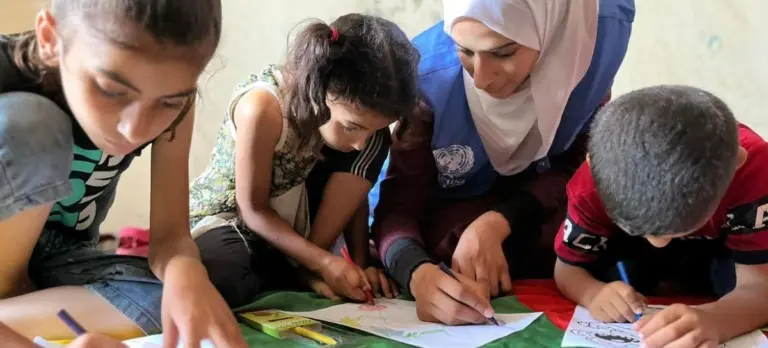
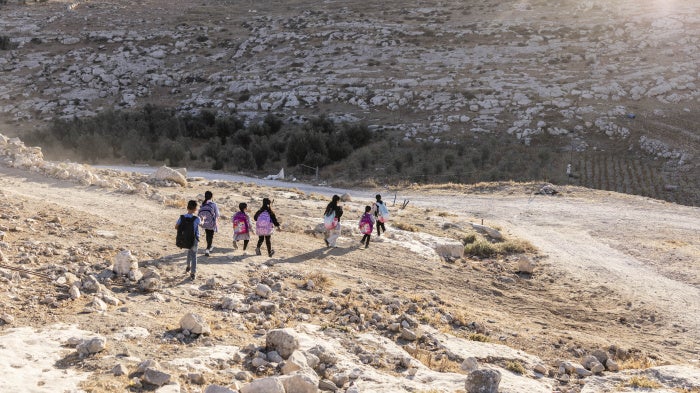
This campaign extends directly into the occupied West Bank and East Jerusalem, where military violence and bureaucratic attrition operate in tandem. Shaheed noted that Israeli authorities demolished ten of forty-eight Palestinian schools in East Jerusalem in September 2026 alone, while other institutions were shuttered after refusing municipal directives to adopt revised curricula that excise Palestinian identity and history. During the first six months of 2026, 224 security incidents disrupted 152 schools across the West Bank, touching more than twenty thousand students, while violent settler incursions displaced at least 1,700 schoolchildren.
For its part, the Israeli government has long dismissed these assessments. Defense officials maintain that schools, university faculties, and public facilities surrender their protected civilian character because armed militants convert them into command nodes, weapons stores, or subterranean passageways. Diplomatic representatives routinely condemn the UN Human Rights Council and its rapporteurs, alleging ingrained political bias and claiming the United Nations serves as an echo chamber for militant organizations.

Yet that bureaucratic alibi collapses under the weight of total destruction. The blanket leveling of every single university in Gaza, accompanied by the targeted elimination of leading researchers, physicians, poets, and teachers, cannot be justified by boilerplate claims of military utility. On October 14, 2026, an independent UN Commission of Inquiry concluded that Israeli authorities have committed crimes against humanity and war crimes against Palestinian children, documenting a conscious architecture of institutional dispossession.
This silencing of Palestinian life relies on the simultaneous silencing of witnesses. Addressing the meeting virtually, Francesca Albanese, the UN special rapporteur on human rights in the occupied Palestinian territory, pointed out that Israeli forces have killed nearly three hundred journalists and media workers in Gaza since October 2023. When those who document history are killed alongside the institutions that preserve it, Albanese observed, “the crime is not only allowed to occur, but is concealed, embedding impunity.”
More than 625,000 children in Gaza have now been denied formal schooling for three consecutive academic years. In plastic tents pitched over rubble, displaced teachers use salvaged scrap paper to conduct rudimentary lessons, refusing to let their students’ intellectual curiosity be extinguished. The special rapporteurs urged international governments to cease all arms transfers to Israel immediately, protect surviving witnesses, and defend the United Nations Relief and Works Agency. As Shaheed warned the assembly, the historical record will inevitably ask what the world did while an entire society’s intellectual life was systematically dismantled. That verdict will depend on whether foreign capitals continue to license that erasure or finally enforce the international law they so readily preach.